 Team Tudum
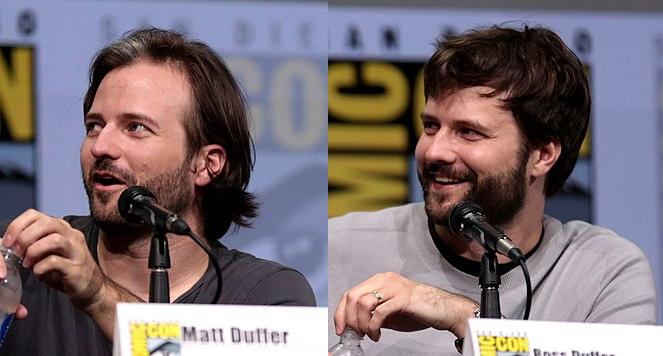
When the last episode of Stranger Things fades to black, it becomes clear that the series isn’t just closing a story (Duffer Brothers). It’s drawing a line under a version of childhood that millions of viewers have grown up with on screen.
For creators Matt and Ross Duffer, that idea shaped the finale long before cameras ever rolled. The closing moments don’t hinge on a monster, a battle, or a grand reveal. Instead, they return to something far more familiar: a basement, a Dungeons & Dragons table, and a group of friends standing on the edge of something they can’t quite name yet growing up.
Over the past several weeks, fans across Reddit, YouTube, and streaming forums have dissected every detail of the ending. Yet beneath the theories and frame-by-frame breakdowns, a simpler question keeps surfacing: how do you say goodbye to a story that has followed both its characters and its audience for nearly a decade?
Why the Story Ends Where It Began
The final image the group leaving the Wheelers’ basement after one last game wasn’t a late-stage creative decision. By the Duffers’ own account in earlier conversations, it was an idea they carried for years.
The basement is more than a setting. It’s where viewers first met these kids as awkward, imaginative, and wide-eyed. Ending the series there turns the space into an emotional bookend. Walking up the stairs becomes symbolic. It’s not just the end of a game. It’s the end of a phase of life.
Online, fans have described the moment as “quietly devastating” rather than dramatic. That reaction aligns closely with what the Duffers appeared to aim for. The scene isn’t meant to shock. It’s meant to linger, the way certain memories do.
What stands out is the generational handoff woven into the moment. Younger kids rushing in to start their own game suggest that the world keeps moving, even as one story closes. For many viewers, that small detail landed harder than any supernatural twist.
Hopper, Eleven, and the Cost of Growing Up
One of the most discussed threads in the finale centers on the relationship between Hopper and Eleven. Their exchange isn’t framed as a heroic speech or a grand sacrifice. Instead, it plays out like a difficult conversation between a parent and a child who is no longer a child.
Hopper’s instinct to protect collides with Eleven’s need to make her own choices. Fans have noted how this dynamic feels less like genre television and more like a real family moment placed inside a supernatural world.
Across streaming forums, viewers have linked this arc to one of the show’s larger themes: survival isn’t just about defeating the villain. It’s about knowing when to hold on and when to let go. That tension, rather than any single line of dialogue, gives their scenes their emotional weight.
Interestingly, many fans have pointed out how this relationship mirrors the audience’s own experience. The characters have grown up, and so have the people watching them. That realization — and the discomfort that comes with it is part of what makes the finale resonate.
An Ending That Refuses Easy Answers
One of the boldest choices in the finale is its restraint. Instead of tying every storyline into a neat bow, the show leaves certain futures open especially Eleven’s.
Rather than placing her into a clearly defined version of “normal,” the story offers something closer to belief. The characters imagine a hopeful path for her, even if they can’t be sure it exists.
That ambiguity has sparked long debates online. Some viewers find it frustrating. Others argue it feels honest. Life, after all, rarely comes with clean epilogues.
From a storytelling perspective, the decision aligns with the show’s core idea: childhood is a space of imagination. Ending with possibility instead of certainty keeps that spirit alive. It also invites viewers to carry the story with them, rather than closing it completely.
Where the Characters Land and Why It Feels Right
The finale doesn’t push every character toward a dramatic, cinematic destiny. Instead, it leans into something quieter and more grounded.
Mike’s turn toward writing reflects the role he’s always played in the group the one who frames the story, who believes in hopeful outcomes even when reality feels messy. Dustin’s path toward college, and his continued bond with Steve, highlights one of the show’s most unlikely relationships: the nerd and the former jock who became something like family.
Lucas and Max’s shared moment doesn’t feel like a grand reunion. It feels like a pause a chance to breathe after years of chaos.
Will’s move toward a place where he can be more fully himself has been one of the most talked-about elements among fans. Many see it as the show finally offering him a future not defined by fear or loss.
Even the teens’ outcomes Steve coaching kids in Hawkins, Nancy stepping into journalism, Jonathan pursuing filmmaking feel grounded. They don’t announce themselves as “TV endings.” They feel like the kinds of choices real people make when they’re still figuring out who they want to be.
The Power of Unlikely Bonds and Steve’s Fall
One of the most tense moments in the finale comes when Steve nearly falls to his death during the final confrontation. For a character who has become a fan favorite, the scene sent social media into a brief panic.
But the moment isn’t really about danger. It’s about resolution.
Jonathan being the one to save Steve closes a long-running, unspoken rivalry. Their shared concern over Nancy had always created distance between them. In that instant, the competition drops away. What remains is trust.
Fans on YouTube and Reddit have pointed out how this reflects one of the show’s central ideas: survival comes from connection, not heroics. The victory isn’t just over the villain. It’s over the divisions within the group itself.
Vecna, Choice, and the Nature of Villainy
The finale also deepens Vecna’s story, offering a clearer look at whether he is a victim of control or the architect of his own path.
Rather than giving him a redemptive turn, the show leans into something darker. He insists on ownership of his choices. That refusal to see himself as anything but right has sparked debates across fan communities.
Some viewers read this as a commentary on power. Others see it as a rejection of the idea that every villain needs to be “saved.”
Either way, the decision keeps the story grounded. The threat isn’t just a monster from another world. It’s a mindset one that refuses to change.
Dustin’s Speech and the Heart of the Show
One of the most widely shared moments from the finale is Dustin’s graduation speech. It’s funny, rebellious, and deeply sincere.
Fans quickly linked it to Eddie’s legacy and the outsider identity of the Hellfire Club. The speech doesn’t celebrate winning. It celebrates belonging.
That theme has always sat at the center of Stranger Things. The Upside Down may be the show’s spectacle, but the emotional engine is the way people who don’t quite fit anywhere else find each other.
In a world that often sorts people into easy categories, the series has consistently pushed back against that idea. Dustin’s moment on stage feels like a final statement of that belief.
Editorial Perspective: Why This Ending Works Now
From our view at Tudum India, the finale arrives at a time when long-running streaming series are being asked to deliver more than spectacle. Audiences want emotional payoff. They want to feel that the time they invested in a story mattered.
Stranger Things doesn’t end with a promise of more. It ends with an invitation to remember. That choice reflects how people now engage with entertainment through rewatches, fan discussions, and shared moments rather than weekly cliffhangers.
In a crowded OTT landscape, that kind of emotional footprint can be more powerful than any visual effect.
FAQs
Where can viewers watch the full series?
All seasons of Stranger Things are available on Netflix, with regional availability depending on location.
Will there be spin-offs or related projects?
The creators have hinted at exploring the world of the show in new ways, though no official series has been announced.
Who created Stranger Things?
The series was created by Matt and Ross Duffer.
Why does the finale focus more on emotion than action?
The creators wanted the ending to reflect the show’s coming-of-age roots, prioritizing character closure over spectacle.
Closing
Stranger Things ends the way it began with a group of kids, a game, and the sense that something important is slipping into the past.
The finale doesn’t chase a perfect resolution. Instead, it leans into the idea that growing up is, by nature, unfinished. Some doors close. Others stay open in memory.
For viewers who followed these characters from their first roll of the dice to their final goodbye, the journey feels less like the end of a show and more like the end of a shared chapter.
And for readers who enjoy exploring how stories are shaped, told, and remembered, Tudum India will continue to follow the creators and moments that define the future of streaming entertainment.